
Chase Stevenson
Aaron is wonderful to work with. Honest, thorough and considerate. My wife and I appreciate the end result so much. It looks amazing Aaron. Thanks
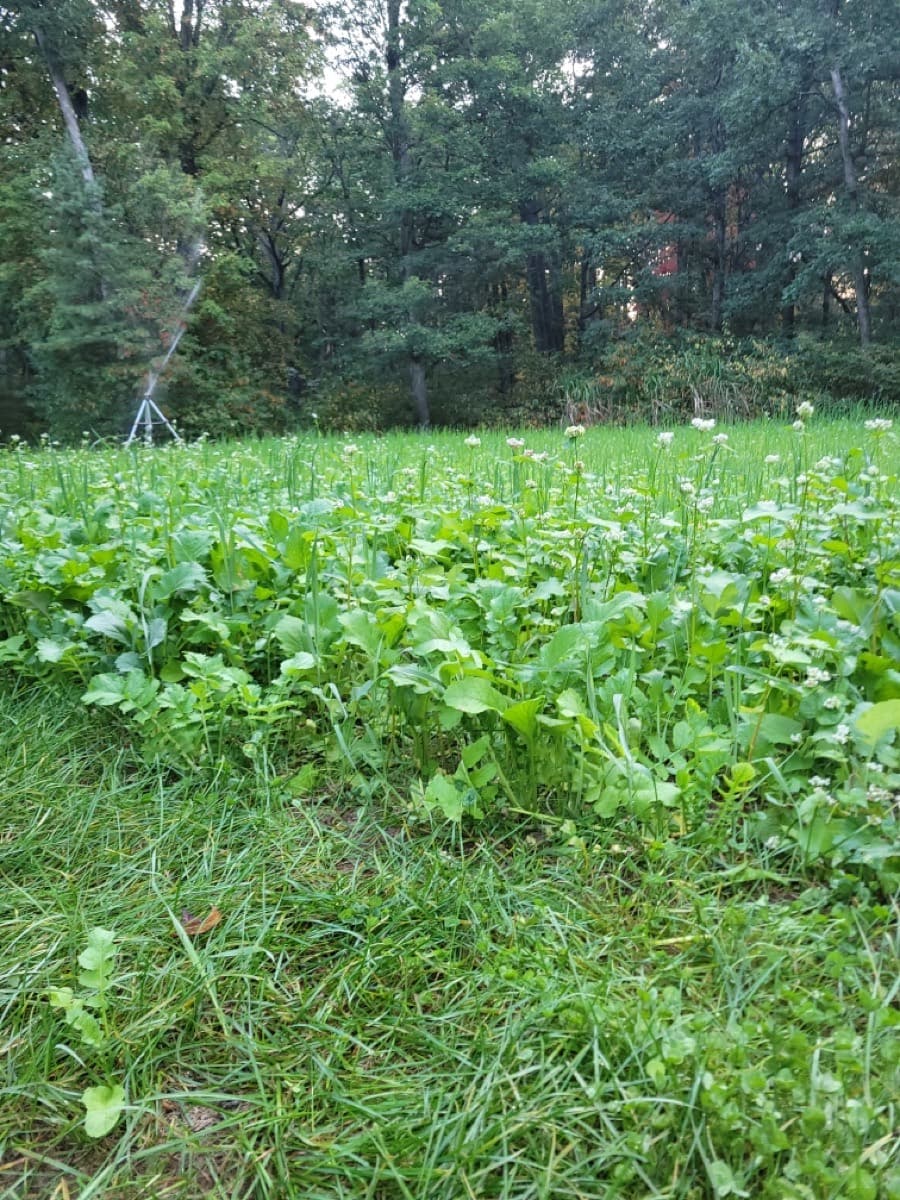
No-till planting puts seed straight into the ground you already have. Instead of plowing and tilling, we kill or mow the existing vegetation and place seed directly into the soil surface, timed so rainfall works it into contact with soil. The residue stays on top, holding moisture and keeping soil where it belongs.
For a lot of West Michigan ground, this is simply the better method. Sandy Oceana County soil blows and dries out fast once it is opened up. Slopes erode. Established plots with good soil structure get worse, not better, from being turned every year. And remote back-forty plots are often not worth hauling tillage equipment to in the first place.
It is also faster and cheaper. There is no multi-pass tillage sequence and no waiting weeks between passes for turned vegetation to break down. On the right site we can go from standing vegetation to planted in a single visit — which matters a great deal when you are trying to hit a narrow fall planting window before the rain comes.
The principle is simple. Rather than turning the whole field over, no-till disturbs only the narrow strip of soil the seed actually needs. The seed ends up in contact with soil at a workable depth while the ground around it stays essentially untouched — residue on top, soil structure intact, root channels open.
On the right sites the simplest version works genuinely well: spray or mow the existing growth, then put seed onto the residue ahead of a rain and let the rain wash it into contact with soil. That suits small-seeded blends like clover, brassicas, and cereal rye. It is more weather-dependent than working ground, which is why we watch the forecast instead of the calendar when we plan it.
Either way the critical step happens before seed touches the ground: killing what is already growing. Seed dropped into a live standing sod will lose. Existing vegetation outcompetes seedlings for moisture and light every time. A properly timed spray or a hard mow ahead of planting is what separates a no-till plot that comes in thick from one that barely shows.
Sandy soil is the clearest case, and West Michigan has plenty of it. Oceana County's sand blows when it is opened up and dries out fast. Every tillage pass costs moisture the plot cannot spare. Leaving residue on the surface shades the ground and holds water where roots can reach it — on a dry August that is often the entire difference between a fall plot that establishes and one that does not.
Slopes are the second clear case. Any tilled ground on a grade will move in a heavy rain, taking your lime, fertilizer, and seed with it down into the low corner. No-till keeps it in place. On rolling ground around Newaygo and Mecosta counties this matters more than most people expect until they have watched it happen once.
Established plots are the third. A plot with a few years of good management has structure, organic matter, and biology built up in it. Turning it every year resets that. No-till lets it keep compounding, and established plots usually get easier and cheaper to maintain each year rather than harder.
The last case is practical rather than agronomic: remote plots. If a spot is a long way back on two-track, hauling tillage equipment in is a real cost and sometimes not possible at all. No-till gets far less equipment to the site, which puts back-forty plots in play that otherwise would not be worth doing.
We will talk you out of no-till when it is wrong for the site, because a failed plot costs everybody more than an honest conversation. Brand-new ground cut out of woods is the main case — it has root mass, uneven surface, and usually a pH in the low fives. None of that gets fixed by planting into it.
Lime is the deciding factor more often than anything else. It moves through soil extremely slowly on its own, so if a soil test says your ground needs two or three tons per acre, surface-applying it under a no-till program means waiting years for it to reach the root zone. Tilling it in once puts it to work the same season. The pattern we recommend most often across West Michigan is one tillage year to establish and correct, then no-till maintenance from there on out.
Heavy compacted clay is the other case. No-till depends on decent soil structure and water movement. Ground that is genuinely compacted needs to be opened up mechanically first — no planting method fixes compaction.
No open ground means no washing on slopes and no blowing on the sandy soils common across Oceana and Newaygo counties.
Surface residue shades the ground and slows evaporation. On a dry August that alone can decide whether a fall plot comes up.
No multi-pass tillage sequence and no waiting between passes. Fewer trips across the ground means a lower bill.
Back-forty plots and spots you cannot get tillage equipment into are still plantable. Much less machine has to reach the site.
Established plots build organic matter and biology over time. Not turning them every year lets that keep compounding.
Chase Stevenson
Aaron is wonderful to work with. Honest, thorough and considerate. My wife and I appreciate the end result so much. It looks amazing Aaron. Thanks
Matthew McClellan
I've known Aaron for sometime now and he is a very hard working honest man. He is one of the best and sure knows his stuff about farming and planting crops! Highly recommend his work!
Chris Beyer II
Highly recommend Fast Forward Plots. Aaron does outstanding work and is great to work with. Professional and gets the job done right.
We provide no-till planting across West Michigan. See what we do in your area: