
Chase Stevenson
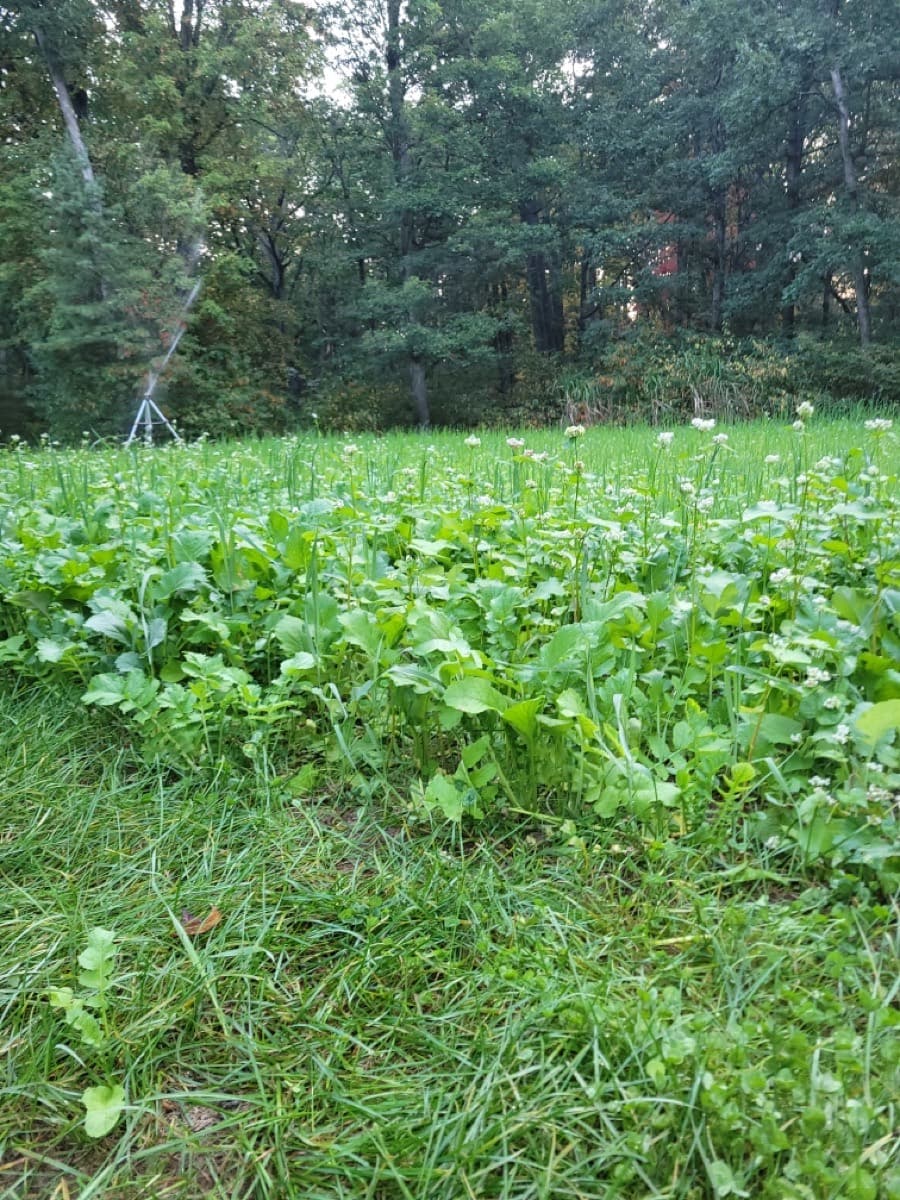
Aaron is wonderful to work with. Honest, thorough and considerate. My wife and I appreciate the end result so much. It looks amazing Aaron. Thanks
Most failed food plots and thin pasture stands do not fail because of the seed. They fail because the ground was never properly prepared. Seed broadcast onto hard, compacted, or rough ground does not make contact with soil, does not hold moisture, and does not germinate evenly. Tillage fixes that — it breaks the surface, buries the old vegetation, incorporates lime and fertilizer where roots can actually reach them, and leaves a firm, even seedbed that seed can take hold in.
We run tillage across West Michigan for food plots, pasture and hay ground, reclaimed field ground, and large garden plots. That covers everything from a single pass to freshen an established plot, to breaking ground that has not been worked in decades and bringing it back into production over multiple passes.
This pairs naturally with the rest of what we do. On a new plot we can mulch the standing brush, till the ground, work in lime and fertilizer to your soil test, and plant it — all in one mobilization instead of you coordinating three contractors or renting equipment you will use once and haul back.
Seed needs three things to germinate: contact with soil, moisture, and reasonable temperature. Broadcasting onto unworked ground reliably fails the first one. The seed lands on thatch, old vegetation, and clods, and most of it never touches soil at all. What germinates dries out because there is nothing holding moisture around it. That is why the same seed that produces a thick stand on prepared ground produces a thin, patchy one on ground that was not worked.
A finished seedbed is firm, not fluffy, with the clods sized down and the surface reasonably level. Firm matters more than people expect — ground tilled loose and left that way lets seed fall too deep and dries out fast. The last pass is about consolidating and leveling, not about turning more dirt.
Working an established plot is straightforward. The ground has been worked before, the root mass is broken down, and a pass or two turns the old growth under and opens the surface back up. Most maintenance tillage on West Michigan food plots falls in this category and gets done in a single visit.
New ground is a different job. Old field that has gone to goldenrod and brush, or a plot freshly cut out of woods, is full of sod, root mass, stumps, and rocks. Working ground like that without prep breaks equipment and produces a mess. The usual sequence is to mulch what is standing, give the root material time to break down, pull out the larger stumps and rock, then till in multiple passes. It takes longer and costs more, but it is what turns unusable ground into a plot that actually produces.
Across Oceana, Newaygo, Mason, and Muskegon counties we see a lot of old orchard and farm ground going back to brush. That ground is often excellent once reclaimed — it was cleared and farmed for a reason — it just needs the reclamation sequence done properly instead of somebody trying to work straight through a thicket.
Most West Michigan soils are acidic and need lime, and the sandy ground common across Oceana County holds nutrients poorly. A soil test tells you exactly how much lime and what fertilizer blend the ground needs. Without one, you are guessing — and the usual result is money spent on seed that was never going to produce in soil at pH 5.2.
Timing is what makes tillage the right moment for amendments. Lime is barely mobile in soil; spread on the surface it can take years to affect the root zone. Incorporated during tillage, it is working within the same season. If you are going to spend money on lime, spending it while the ground is open is the difference between it doing something this year and doing something in 2029.
Food plots are the bulk of our tillage work, but the same equipment and the same prep does other jobs. We work ground for pasture and hay seeding on small livestock operations, prep sites for lawn establishment on new builds, break ground for large garden and market-garden plots, and reclaim old field ground being brought back into production.
If you have got ground that needs to be worked up and planted into something, it is worth a call regardless of what the something is. The prep work is largely the same and it is a service most people around here have trouble finding somebody willing to come do on a smaller acreage.
A worked seedbed is the difference between even germination and a patchy stand. Seed needs to sit in soil, not on top of thatch and clods.
Lime moves through soil very slowly on its own. Incorporating it during tillage corrects pH years faster than surface application does.
Old field ground, logging traffic, and heavy West Michigan clay all compact. Tillage opens the profile so roots and water can move through it.
Turning existing vegetation under knocks back established weeds and gives whatever you plant a clean start instead of a fight.
No renting equipment, no hauling it, no learning it on your own ground. We show up with what the job needs and do it.
Chase Stevenson
Aaron is wonderful to work with. Honest, thorough and considerate. My wife and I appreciate the end result so much. It looks amazing Aaron. Thanks
Matthew McClellan
I've known Aaron for sometime now and he is a very hard working honest man. He is one of the best and sure knows his stuff about farming and planting crops! Highly recommend his work!
Chris Beyer II
Highly recommend Fast Forward Plots. Aaron does outstanding work and is great to work with. Professional and gets the job done right.
We provide tillage & field prep across West Michigan. See what we do in your area: